EXPERT CARE FOR NEUROLIGICAL DISORDERS
Our team provides comprehensive evaluation and treatment for neurological disorders affecting the brain, spinal cord, and nerves. We focus on accurate diagnosis, personalized care, and helping patients achieve the best possible quality of life.
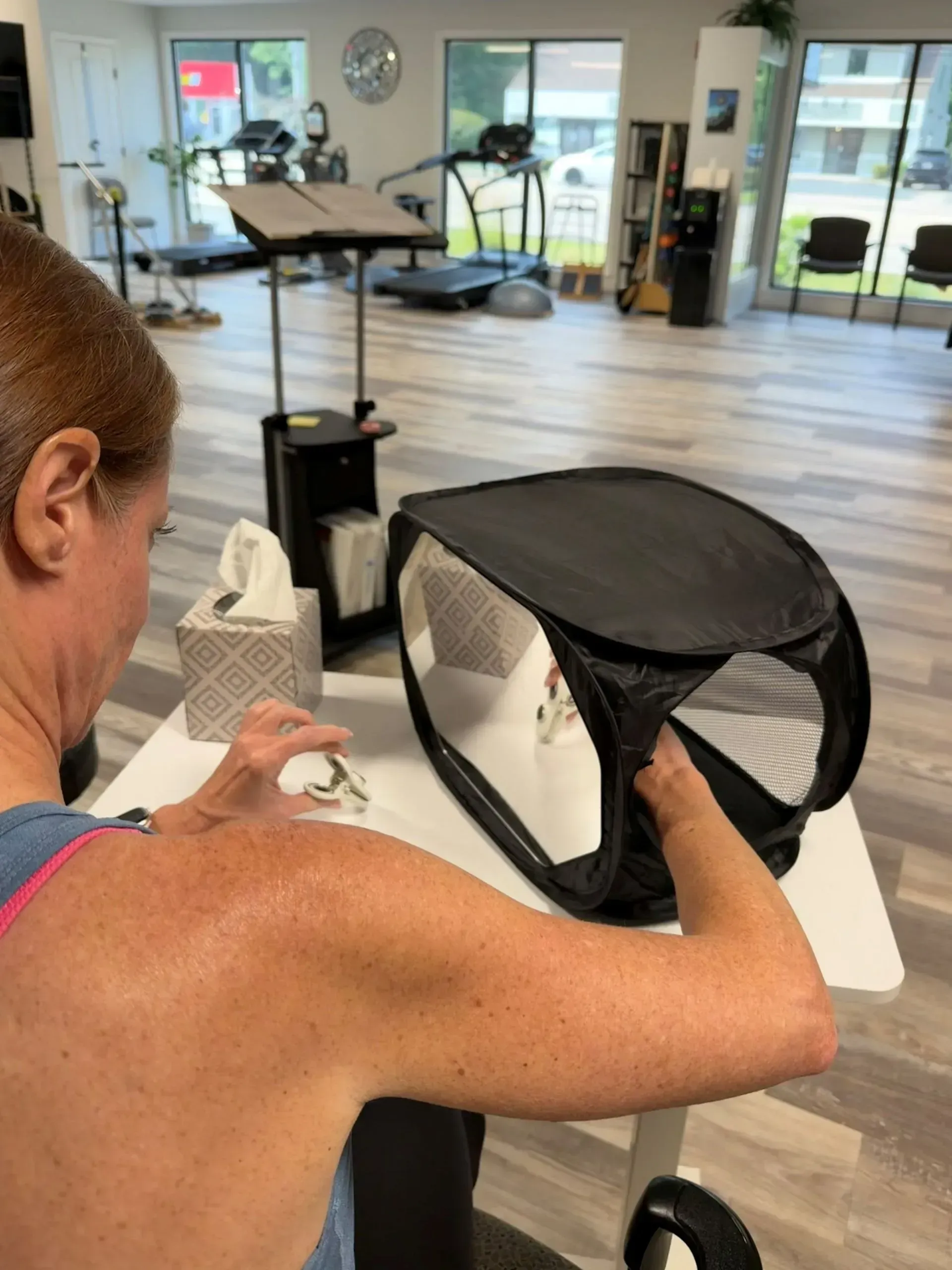
Mirror therapy is a rehabilitation technique used for post-stroke patients to help improve motor function—especially in the affected arm or hand—by using visual feedback to stimulate the brain’s recovery process.
Here’s how it works: Basic Concept
- A mirror is placed vertically in front of the patient, with the reflective side facing the unaffected limb.
- The affected limb is hidden behind the mirror.
- When the patient moves their unaffected limb, they see its reflection in the mirror—creating the illusion that the affected limb is moving normally.
- This “visual trick” can activate brain areas associated with motor control on the affected side, even if the patient cannot physically move that limb.
- Neuroplasticity: The brain can reorganize itself after injury. Mirror therapy uses visual input to “retrain” neural pathways that were damaged during the stroke.
- Motor cortex activation: Seeing the mirrored movement can stimulate the same brain regions responsible for moving the affected limb.
- Sensory feedback: The illusion can help reduce neglect (ignoring the affected side) and improve proprioception (awareness of limb position).
- Pain management: It has also been shown to reduce post-stroke pain and spasticity in some patients.
Typical Session
- Set-up: Patient sits with the mirror between their arms, affected arm hidden.
- Exercises: Patient performs simple movements with the unaffected limb (e.g., opening and closing the hand, wrist rotations, reaching).
- Focus: Patient is instructed to watch the reflection and imagine they are moving the affected limb.
- Duration: Often 15–30 minutes per day, 3–7 times per week, for several weeks.
- Improves motor function in the affected limb
- Reduces learned non-use
- Enhances motivation (movements appear more “normal”)
- May reduce neuropathic pain
- Accessible and inexpensive—can be done at home Best Candidates
- Stroke survivors with unilateral motor deficits (one side affected)
- Patients who still have some motor recovery potential
- Those without significant visual or cognitive impairments
Best Candidates
- Stroke survivors with unilateral motor deficits (one side affected)
- Patients who still have some motor recovery potential
- Those without significant visual or cognitive impairments
What symptoms may indicate a neurological disorder?
Neurological conditions can cause symptoms such as muscle weakness, numbness or tingling, balance and coordination difficulties, problems with walking, tremors, changes in sensation, muscle stiffness, and difficulties with movement or speech. A professional evaluation can help determine the appropriate course of care.
How are neurological disorders evaluated and treated?
Evaluation typically includes a review of your medical history, symptoms, movement, strength, coordination, balance, sensation, and functional abilities. Depending on your condition, treatment may include therapeutic exercises, movement training, balance and coordination activities, functional rehabilitation, and specialized techniques such as mirror therapy.
What is mirror therapy?
Mirror therapy is a rehabilitation technique that uses visual feedback to help retrain the brain and improve movement in an affected arm or hand. It is commonly used for patients recovering from stroke and can be incorporated into a personalized neurological rehabilitation program.
How does mirror therapy work?
During mirror therapy, a mirror is positioned so that the reflection of the unaffected limb creates the visual illusion that the affected limb is moving normally. This visual feedback may stimulate areas of the brain involved in motor control and support neuroplasticity, movement, coordination, and awareness.
REVIEWS